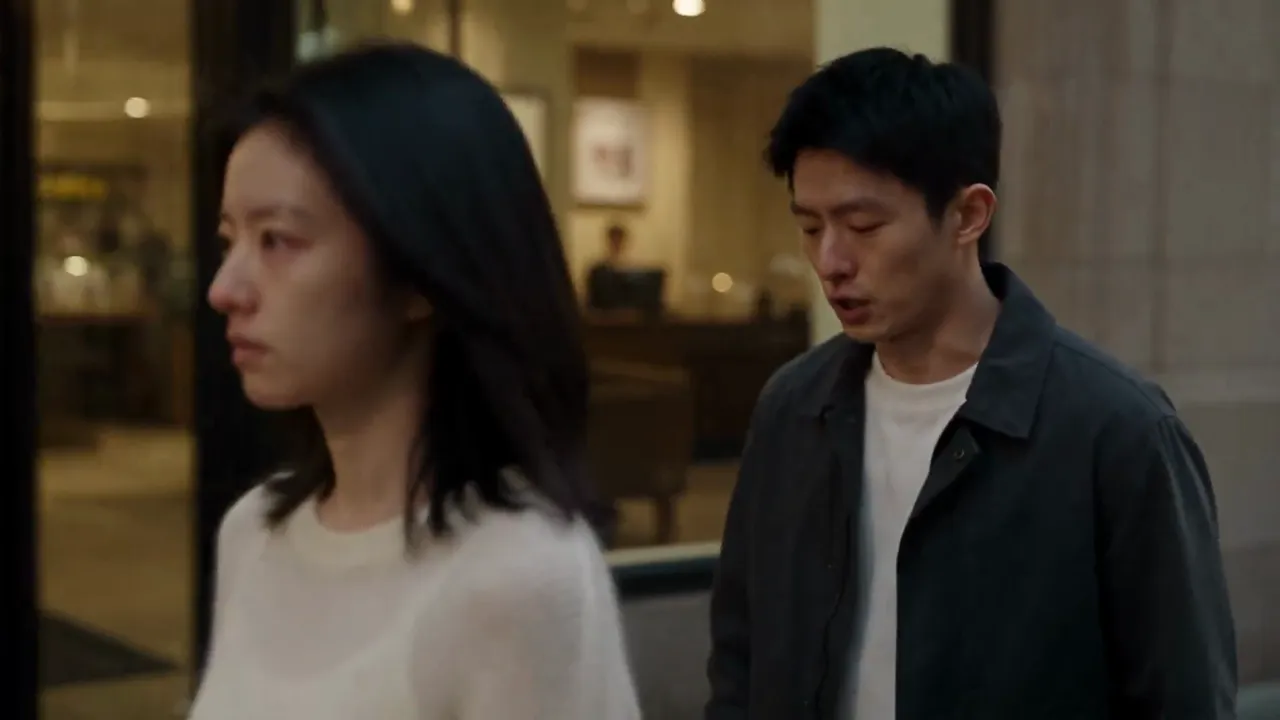
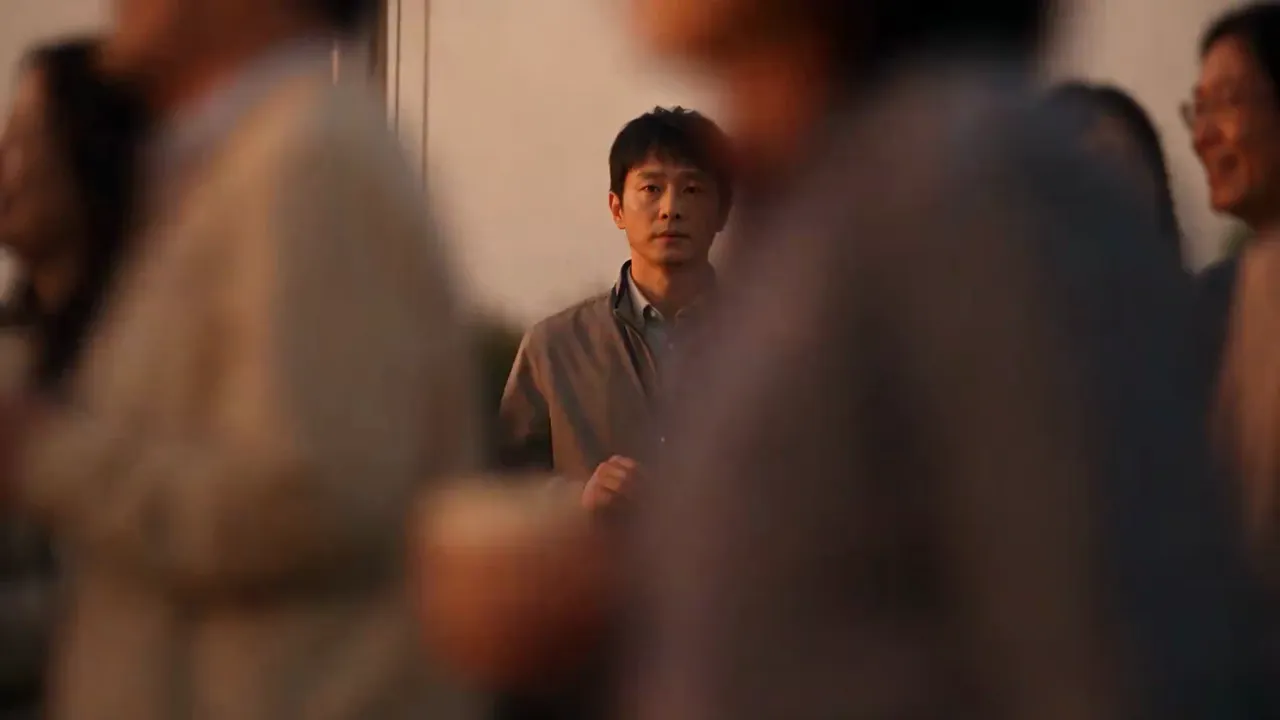
MAGI-2 is a high-quality AI video model with outstanding value. One prompt makes a 30-second 1080p video with sound — with 20 references, timing control to the second and strong prompt following, it gets every instruction right.
MAGI-2 is live: 1080p, 4–30 seconds with native sound.
MAGI-2 (also MAGI 2 or MAGI2) is an AI video model released on November 24, 2026 that makes up to 30 seconds of 1080p video with synced sound in one generation. It follows prompts closely and offers great value.
MAGI-2 at a glance
MAGI-2 at a glance
Details
Sound
Lip-synced dialogue, sound effects and music generated with the picture
References
Up to 20 per request: 10 images, 5 videos and 5 audio clips keep characters, places and voices consistent
Shot control
Write prompts by time range (e.g. 0–10 s, 10–20 s) to place each cut
Benchmark
Elo 1150.3 (4-task average) on Artificial Analysis Video Arena, a blind-vote leaderboard
What can MAGI-2 do?
Watch MAGI-2 release examples grouped by what they show — 30-second long takes, omni-reference, timeline control and emergent reasoning — plus real tests from creators.
01 / 05
One continuous take, up to 30 seconds
MAGI-2 holds a scene for up to 30 seconds at 1080p and 25 fps, so slow reveals, style transitions and long camera moves can play out in one generation instead of several stitched clips.
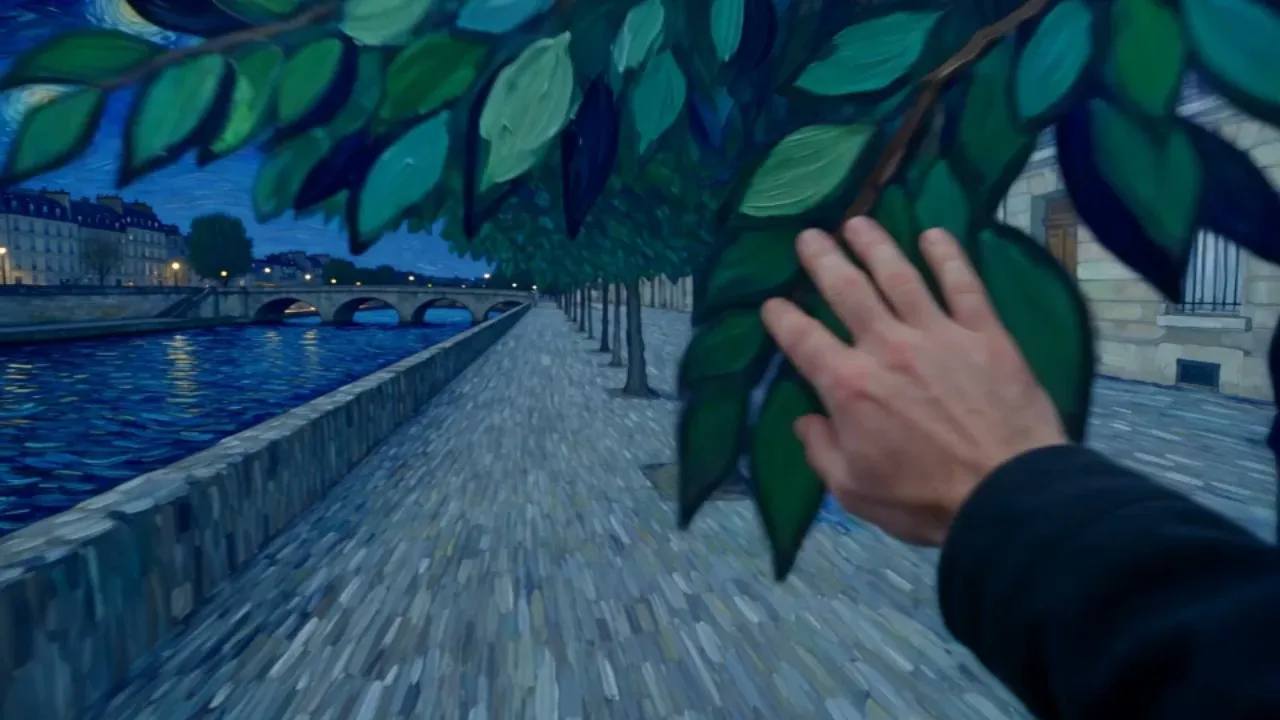
Five art styles in one take
Conditioned on five classic paintings, including The Starry Night, Water Lilies and A Sunday Afternoon on the Island of La Grande Jatte, MAGI-2 moves through every style in a single 30-second continuous shot.
Release example · MAGI-2
Reference paintings
Inputs
Five classic paintings as references, including The Starry Night, Water Lilies and A Sunday Afternoon on the Island of La Grande Jatte. One 30-second continuous take with smooth stylistic transitions.
Detail after post-training
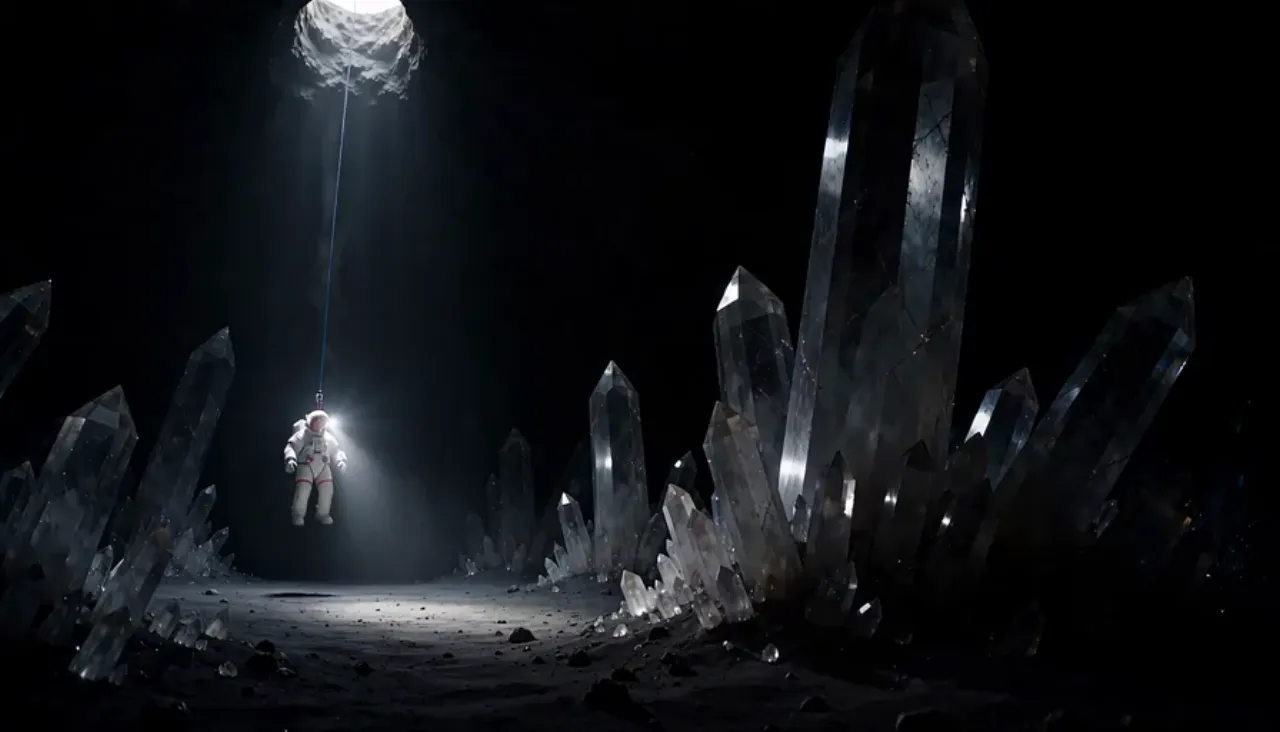
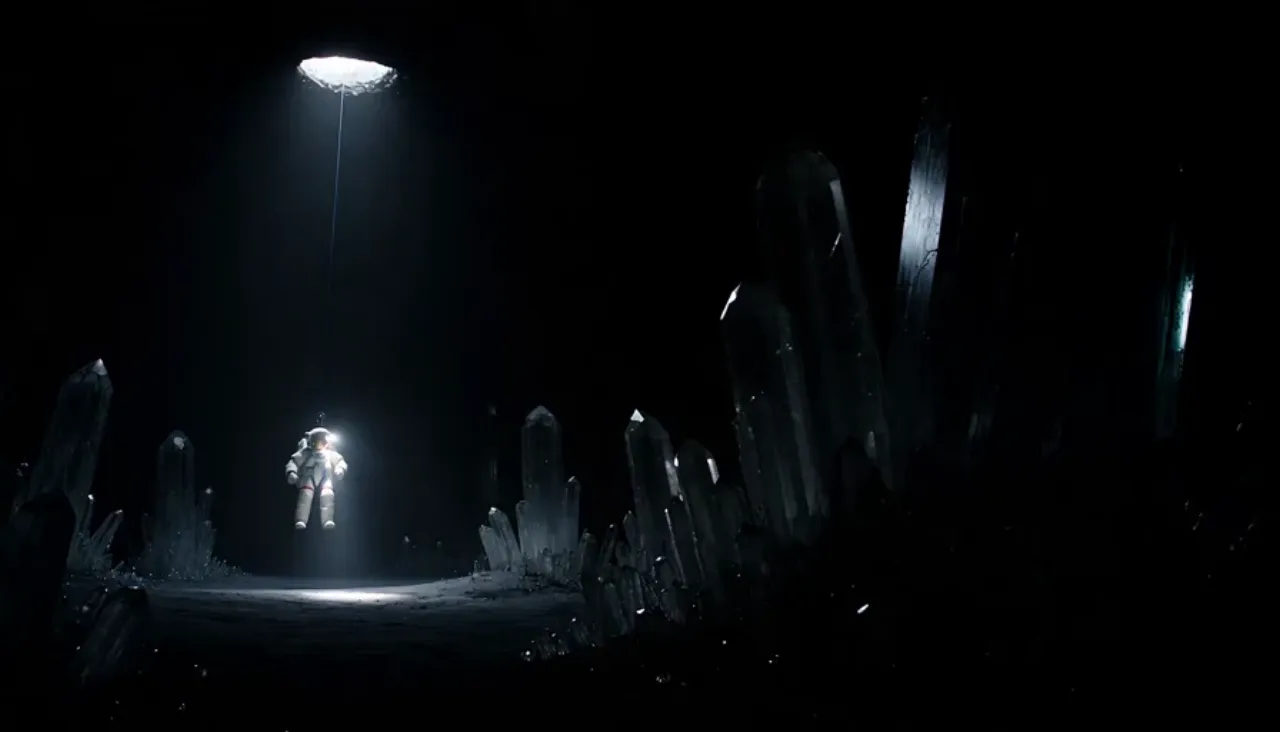
Post-training focuses on lighting depth, micro-texture, fur and material realism. These two 25 fps clips of the same “Lunar Cave” scene were released as a before-and-after comparison for reinforcement learning.
Release example · MAGI-2
RL comparison
Comparison
Clip 1 of 2 from the “Lunar Cave” pair released to compare output before and after reinforcement learning.
Release example · MAGI-2
RL comparison
Comparison
Clip 2 of 2 from the same pair. Compare lighting depth, surface texture and material detail between the two clips.
02 / 05
Omni-reference: lock characters, places and sound
One MAGI-2 request accepts up to 20 references — as many as 10 images, 5 videos and 5 audio clips — so a character, a location or a voice can stay consistent across a whole scene.
Character and locations from references
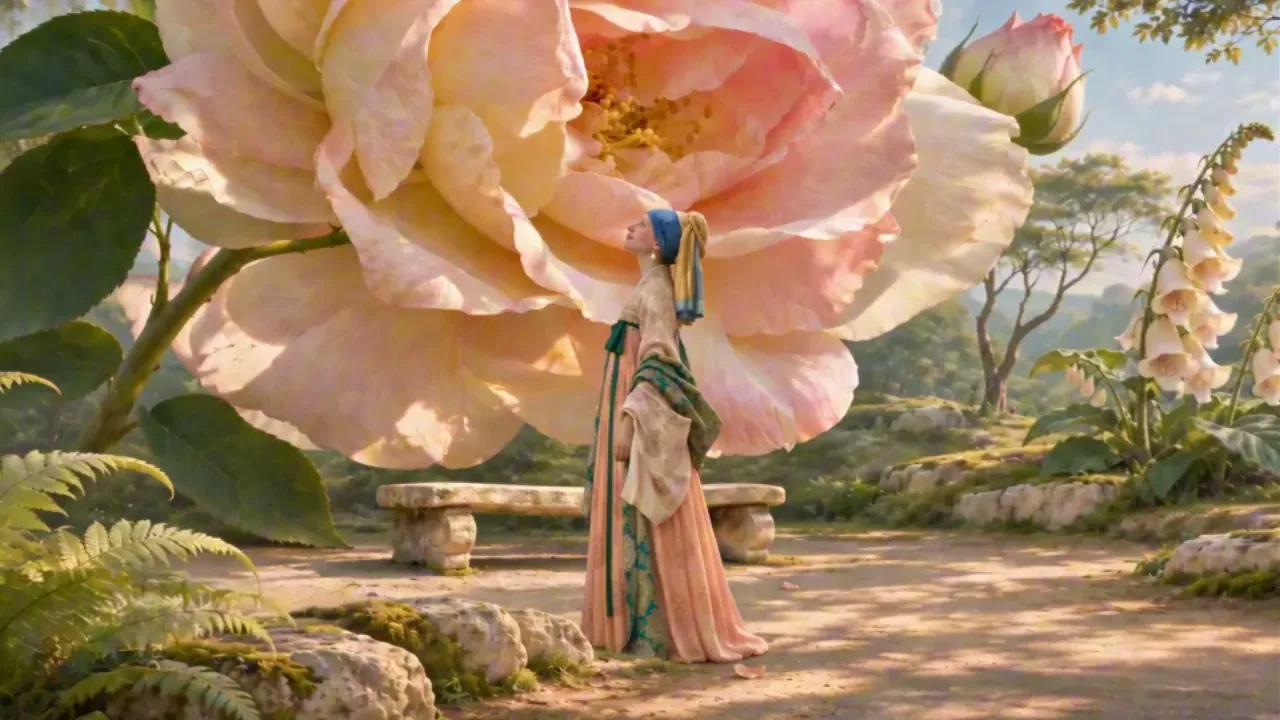
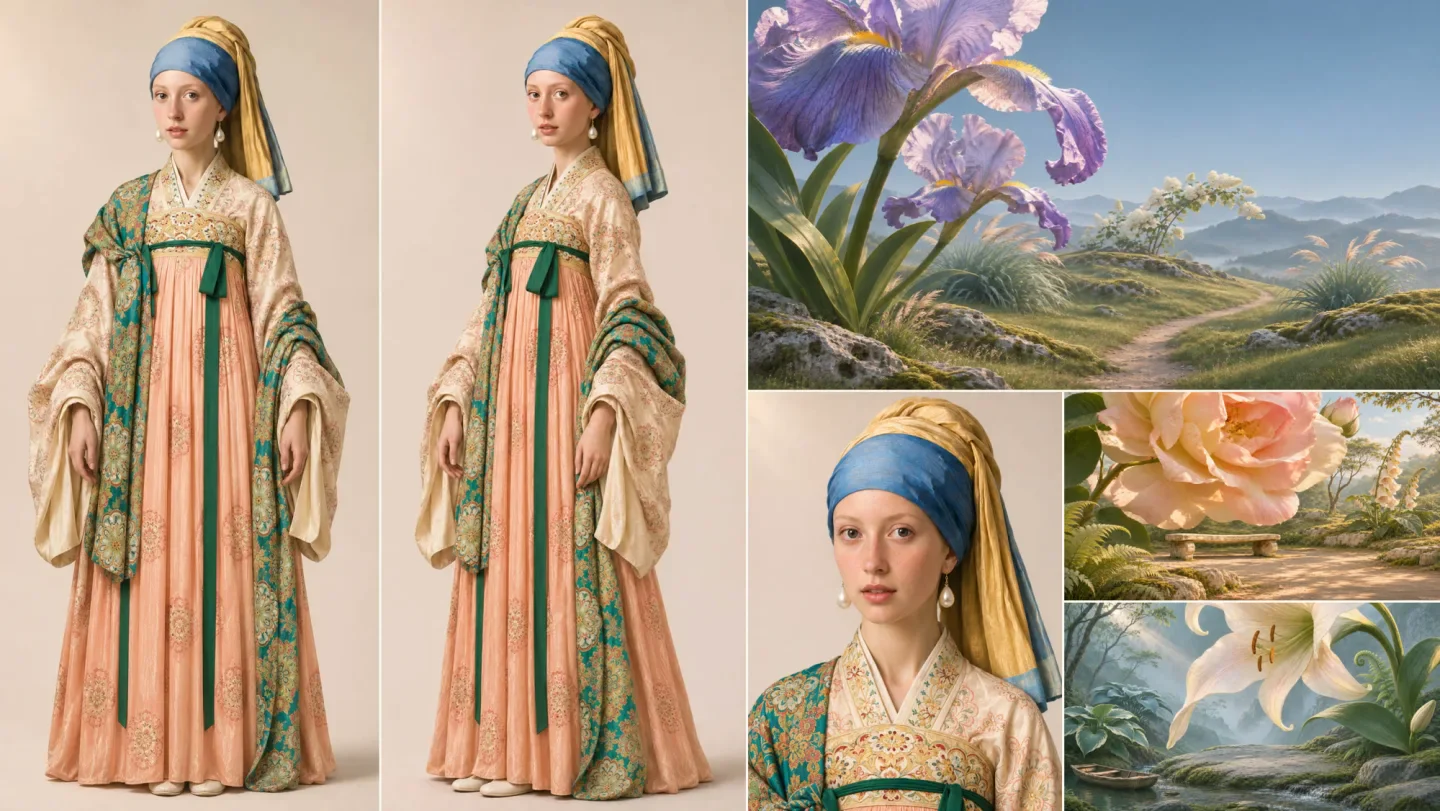
A character sheet and several location images guide one generation. The wardrobe stays locked while the scene travels through an iris hillside, a rose garden and a lily valley.
Release example · MAGI-2
Reference images
Character and location references
From story beats to a directed scene
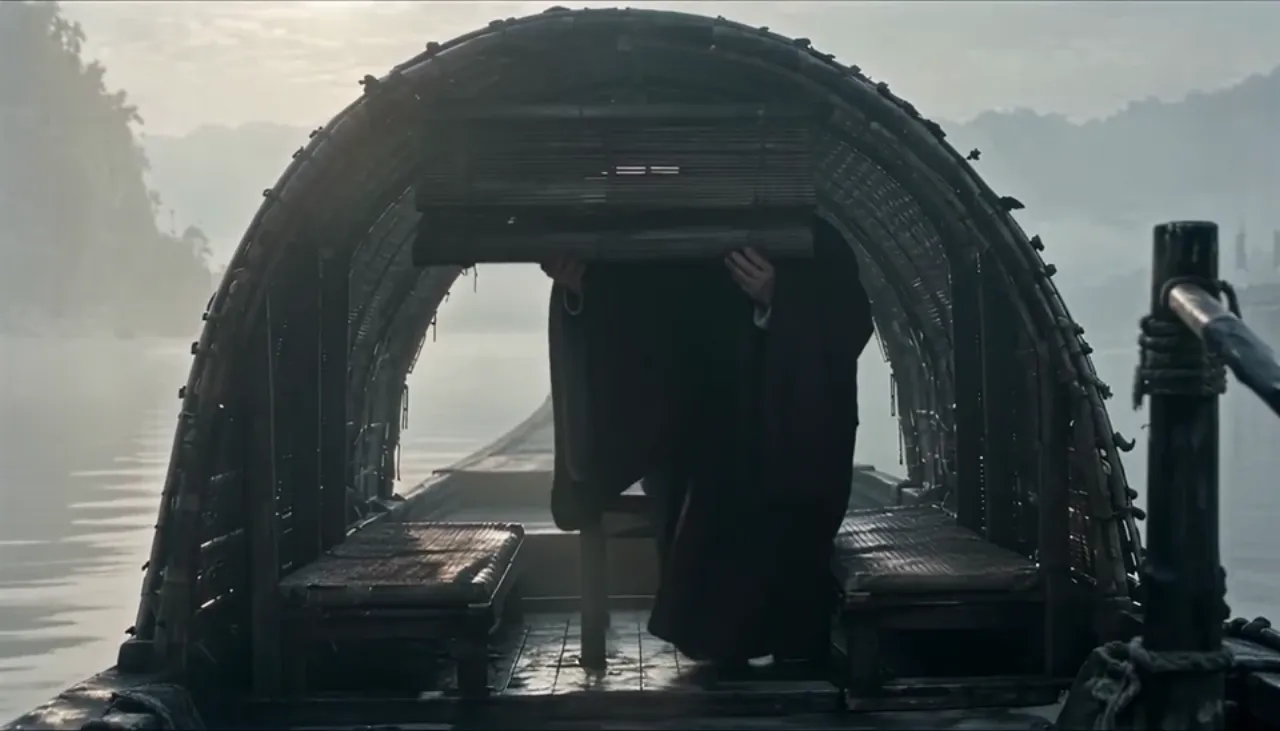
Given character and scene references plus three story beats, the model planned framing, perspective switches and close-ups on its own, with dialogue and river sound generated together.
Release example · MAGI-2
References + story beats
Inputs
Character and scene references for Lu Su, Zhuge Liang and a river boat, plus three story beats. No framing, camera angles or cut points were specified (pre-trained checkpoint, prompt enhancement off).
03 / 05
Timeline control and video editing
Write a scene as a timeline, mark the cuts and let MAGI-2 follow it, or change one part of an existing video while the rest of the shot stays intact.
Cuts exactly where you place them
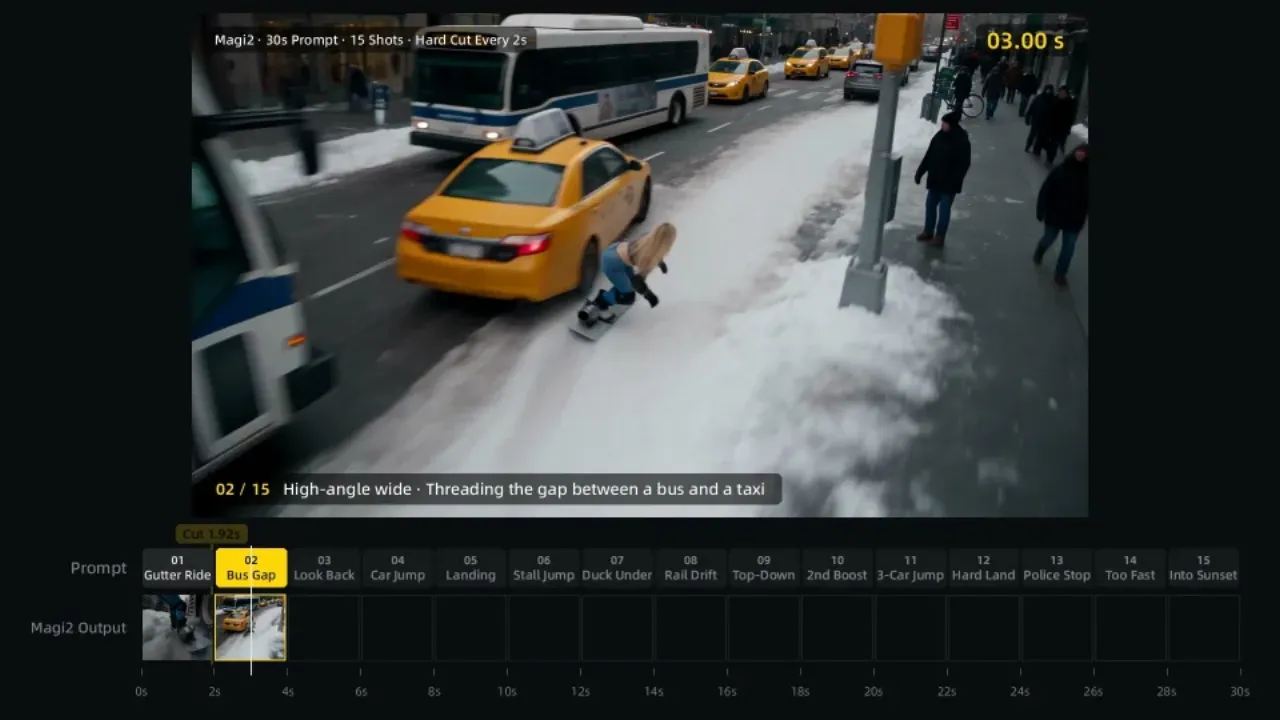
Describe each segment and ask for hard cuts at specific seconds. In a 20-shot test reported by Chinese tech media, MAGI-2 hit all 19 planned cut points with an average offset of 0.05 seconds.
Release example · MAGI-2
Timeline prompt
Inputs
A segment-by-segment timeline prompt with planned shot changes. MAGI-2 places each cut on the requested beat within one 30-second generation.
Targeted edits to existing footage
Give MAGI-2 an existing clip and an instruction. It edits the requested element and keeps the composition, motion and lighting around it.
Release example · MAGI-2
Video + edit instruction
Inputs
An existing video plus an editing instruction. MAGI-2 changes the requested element while the rest of the scene stays stable.
04 / 05
Emergent visual reasoning
Testing the 480B pre-trained checkpoint turned up skills nobody trained for directly: solving visual puzzles, planning shots from a short beat sheet and translating dialogue into another language.
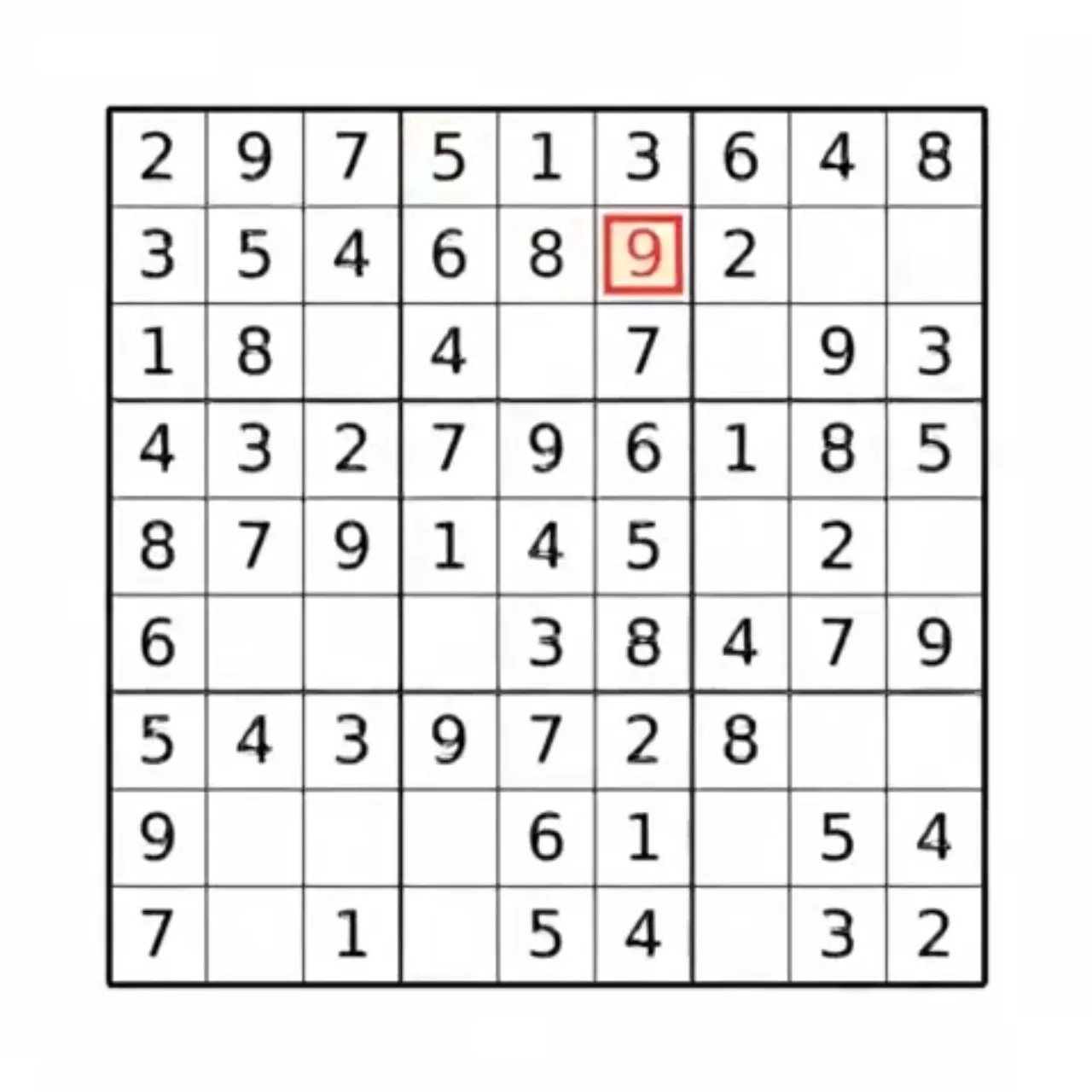
A 9×9 Sudoku, solved on screen
With prompt enhancement switched off, the pre-trained model kept every given digit and filled the remaining cells so each row, column and 3×3 box contains 1–9. The release notes add that these behaviors get harder to trigger after aesthetic post-training.
Release example · MAGI-2
Prompt
Prompt
Solve this 9×9 Sudoku puzzle step by step, filling each empty cell one by one while keeping all given digits unchanged.
05 / 05
Real creator tests before launch
Chinese creators and tech media tested MAGI-2 before release. These clips show camera work, emotional performance and stylized animation, with the prompts they published where available.
Camera and space
Bold orbits, crane moves and a paper plane flying through a whole school in one take — tests of camera control and spatial continuity.
Creator test · MAGI-2
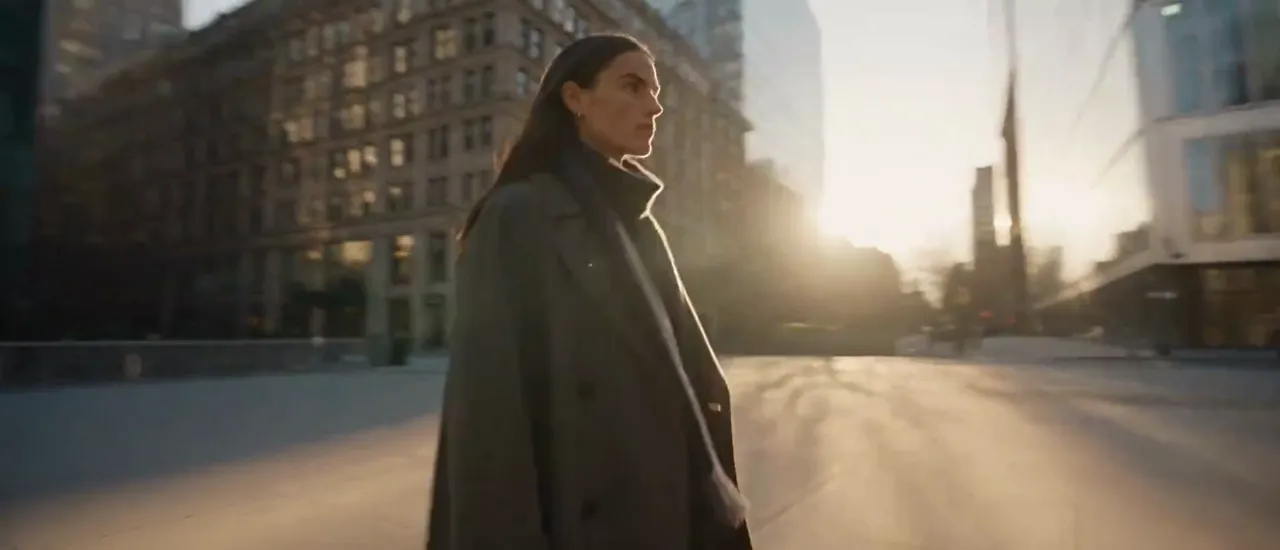
Orbiting camera around a model in the city
Prompt (translated)
Shot on an iPhone camera: smoothly track a full-body model in a coat from the side, move in front and speed up slightly, arc around to the back and rise quickly to a top-down view. Arc back down fast to the front, hold a facial close-up for a moment, then accelerate backward and upward to settle softly on a high wide view of the city. Use a natural 28–35 mm wide-angle look and keep enough distance in close-ups to avoid stretching the face and limbs. Ease every rise and descent in and out; keep the subject's motion at normal speed so rhythm comes from the camera. The background should show continuous parallax as the camera moves — large shifts up close, small shifts far away — so the city never rotates like a flat texture. Keep it one continuous take. If a hidden cut is needed, only join where clothing or foreground buildings briefly cover the frame, keeping motion, proportions and positions consistent across the cut. Match the music to the camera moves for a strong sense of rhythm.
Creator test · MAGI-2
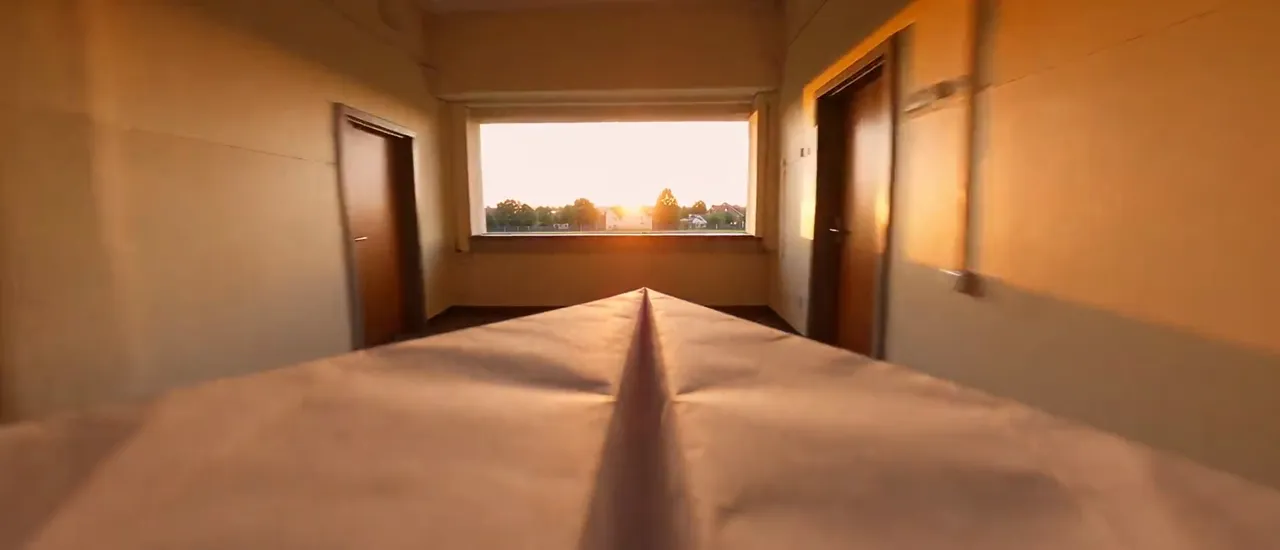
Paper plane through a school in one take
Prompt (translated)
Shot on a native iPhone camera, natural light, sunset glow, one continuous take with spaces joining naturally: at sunset a white paper plane takes off from the rooftop of a school building. The camera follows behind it over the roof edge and dives with it into the open corridor below. The plane enters a classroom, skims the desks and brushes past the blackboard; the camera passes under the wing to the other side, speeds around to face the nose and watches it fly out the back door. At the end of the corridor a wide window stands fully open onto the playground. The plane flies out through the window, banks gently and glides down along a row of windows a few meters from the wall. The camera looks down on its back, then arcs down on the playground side to look up at its belly. Near the ground floor the plane turns into the hall's open side door; the camera circles back to the tail and follows it through the hall while rolling a full turn on its own axis, leveling out as it exits. It then skims the grass over the plane's shadow, arcs up to the wingtip and slows with the plane until it settles in the palm of a European girl walking toward it, its paper wings trembling. The plane always glides naturally with slight drift from the breeze; speed changes come mainly from the camera. Near window frames rush past while distant floors appear one by one, with clear, continuous parallax on every orbit. Spaces must connect one after another — the plane must never pass through walls.
Performance and emotion
Quiet tears, a missed kiss and a sunset reunion: scenes carried by eyes, micro-expressions and timing rather than dialogue.
Creator test · MAGI-2
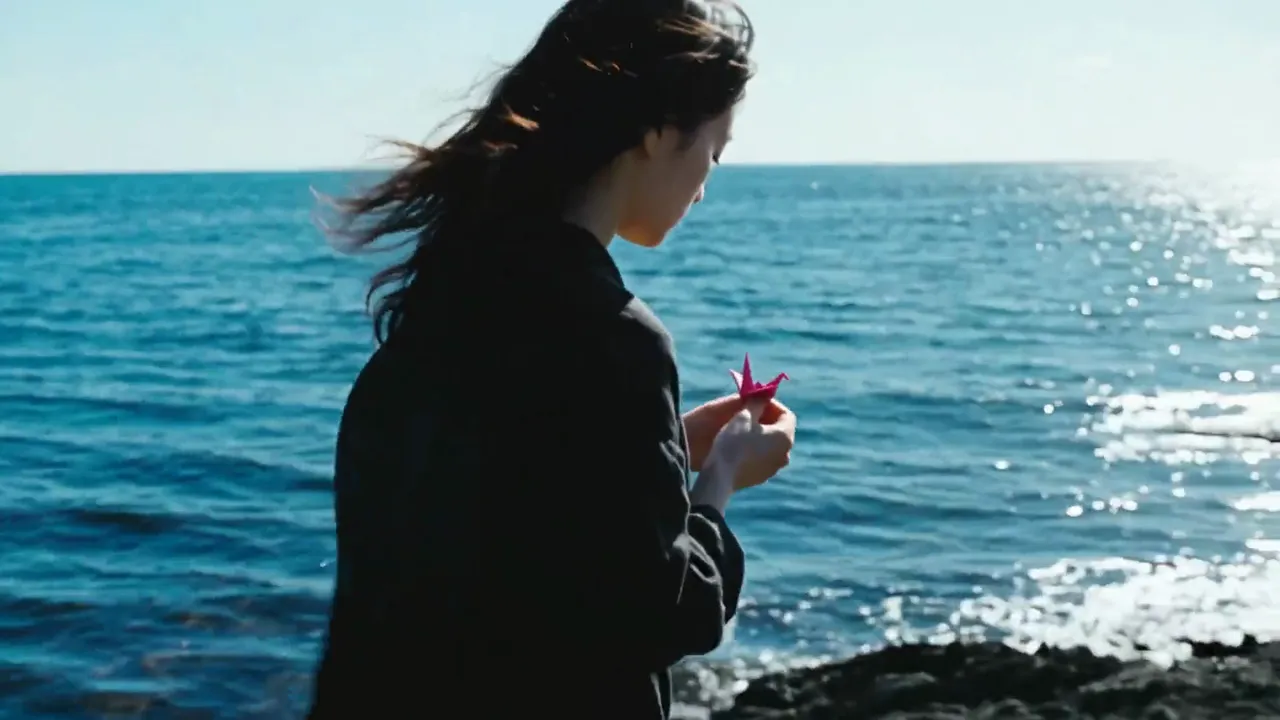
Micro-expressions: letting go by the sea
Prompt (translated)
A girl who has just been through a breakup comes to the sea alone, looks at the pink paper crane in her hand, cries quietly, and finally lets go with relief.
Creator test · MAGI-2
Two-person close-up: the missed kiss
What was tested
A two-person close-up scene: a boy thinks he has been forgiven and leans in for a kiss, the girl pulls back at the last moment, and his momentum leaves him leaning awkwardly forward.
Creator test · MAGI-2
Reunion at sunset: four shots, one generation
What was tested
A reunion scene on a school playground at sunset: she recognizes him twenty meters away, freezes, puts down her paper cup and walks over to say “Long time no see” — four shots in a single generation.
Styles and animation
Paper-cut, impasto oil paint and ink-wash animation that stay true to the requested medium.
Creator test · MAGI-2
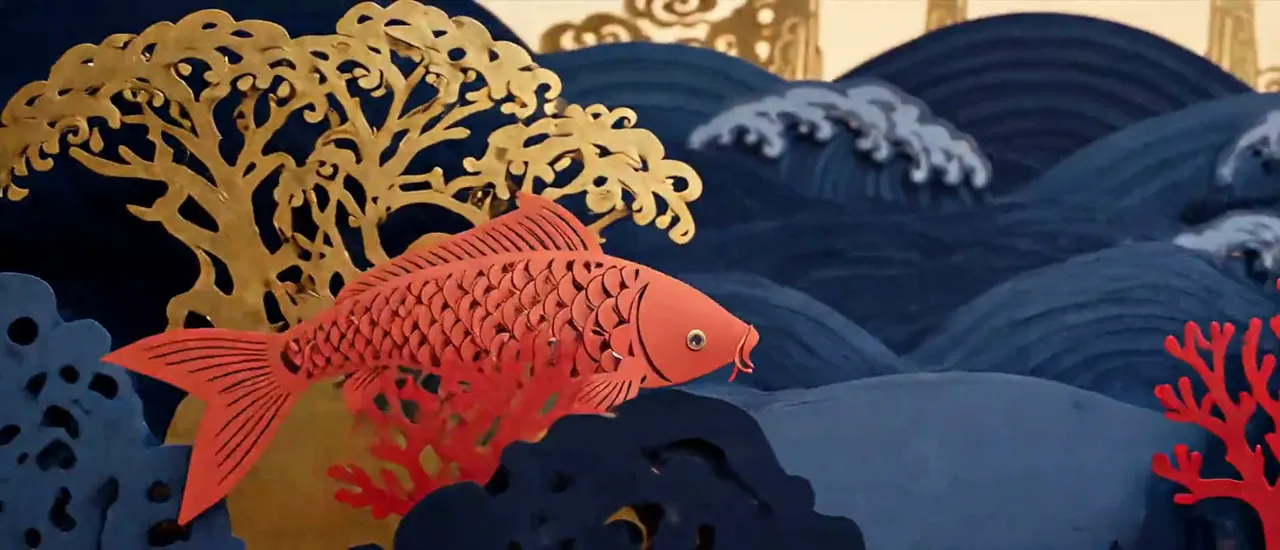
Layered paper-cut animation: carp becomes a dragon
Prompt (translated)
Traditional Chinese layered hollow paper-cut animation on warm, translucent off-white window paper, with hand-cut vermilion, gold and indigo layers stacked on top of each other. Keep the paper fibers, fine serrated cut-out patterns, slight real shadows between layers and a hand-made, slightly stepped frame rate; never drift into 3D rendering or smooth CG. The camera pushes in: a flat indigo paper roll flips up with a rustle into rolling paper waves; a vermilion paper carp covered in delicate cut-out patterns leaps out against the current, weaves between layered paper reefs and falling gold paper lightning, then flicks its tail and charges at a tall gold paper Dragon Gate. As it clears the gate, the red and gold pieces burst apart, spin and reassemble in mid-air into a huge red-and-gold paper dragon that breaks through the paper clouds and spirals upward, while drifting red scraps settle into an elegant, symmetrical paper-cut panorama. No dialogue; crisp paper folding and rustling, rapid pipa strumming and powerful Chinese drums.
Creator test · MAGI-2
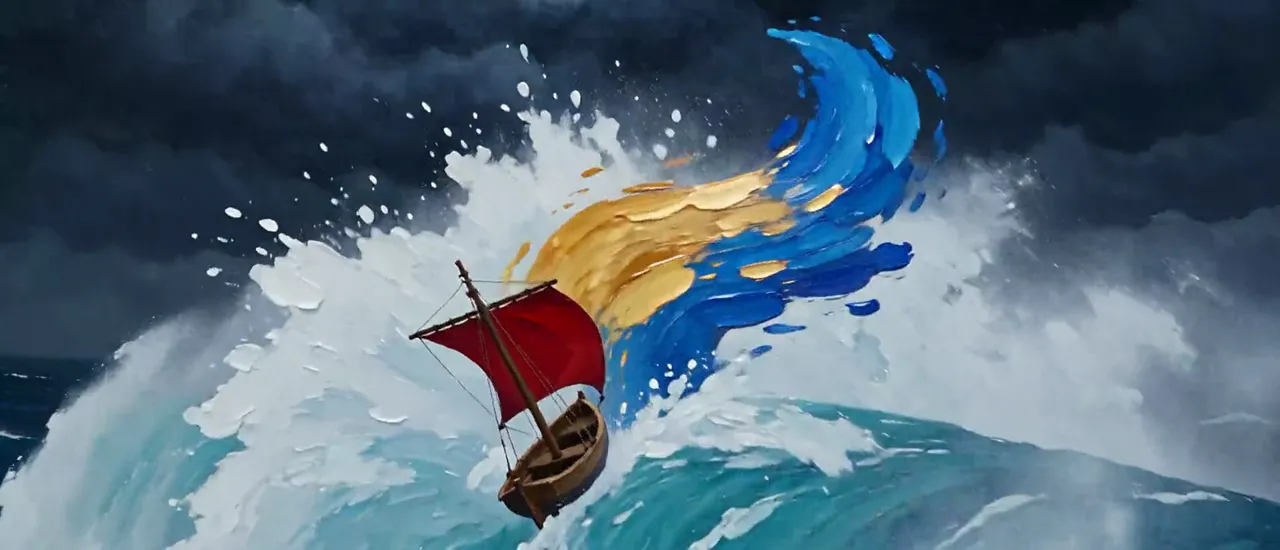
Impasto oil-paint animation: red sail in a storm
Prompt (translated)
Rich impasto oil-paint animation: every frame is built from thick, sculpted oil paint with visible palette-knife texture and strong swirling brushstrokes; never drift into live-action film. On a storm-lashed, deep-blue sea a small wooden boat with a red sail struggles up an oil-paint wave slightly taller than the boat. The wave smashes on the bow and bursts into thick ultramarine and golden paint spray; then, defying gravity, the spray spirals up on the wind into the black night sky and blooms into brilliant, swirling golden nebulae and flocks of glowing oil-paint seagulls. Light breaks through the clouds onto the sea, and the camera rises to look down on the boat riding the waves toward a golden dawn. No dialogue — only crashing waves, howling wind and swelling strings.
Creator test · MAGI-2
Hand-painted ink animation: the red letter bag
Prompt (translated)
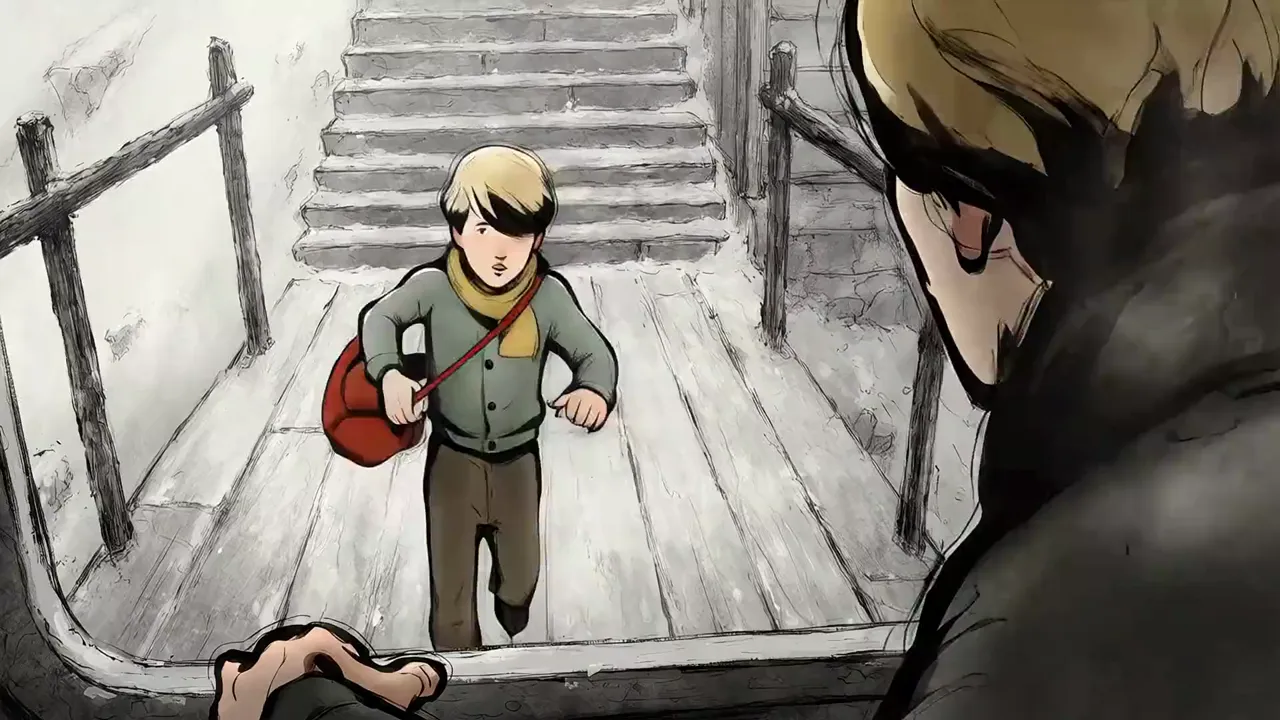
A courier runs down stone steps; passengers on a cable car think he is chasing it and shout for him to stop. He is not trying to board — he throws a red letter bag to a passenger and asks them to carry it down the mountain. Hand-painted ink-wash animation style.
Three ways to start a MAGI-2 video
MAGI-2 accepts a written scene, a still image or a full set of references, and all three workflows are open now. Choose MAGI-2 or another connected model in the same menu.
MAGI-2 text to video
Describe the subject, setting, action, camera and sound. MAGI-2 reads a prompt like a shot list, so time ranges and named cuts give it a clear plan.
Describe the subject, setting and camera, then split the action into time ranges such as 0–10 s, 10–20 s and 20–30 s. Name the sounds you expect in each part.
02
Add references for what must stay the same
Upload a character sheet, a location still, a motion clip or a voice sample you have permission to use. Keep the text prompt for action and mood.
03
Set length, ratio and cuts
Choose the duration and aspect ratio, mark any hard cuts and check the credit cost before you generate.
04
Review, then change one thing
Check identity, motion, timing and audio. Change one beat or one reference at a time so you can see what each edit does.
MAGI-2 vs Seedance 2.5, Kling 4.0, Wan 3.0 and MiniMax H3
Specs come from each model’s public launch information.
MAGI-2 vs Seedance 2.5, Kling 4.0, Wan 3.0 and MiniMax H3
Feature
MAGI-2
Seedance 2.5
Kling 4.0
Wan 3.0
MiniMax H3
Best for
30-second single takes, short dramas and ads
Complex scenes with many references, editing and extending video
Character performance and action, keyframe control
General creation from mixed text, image, audio and video
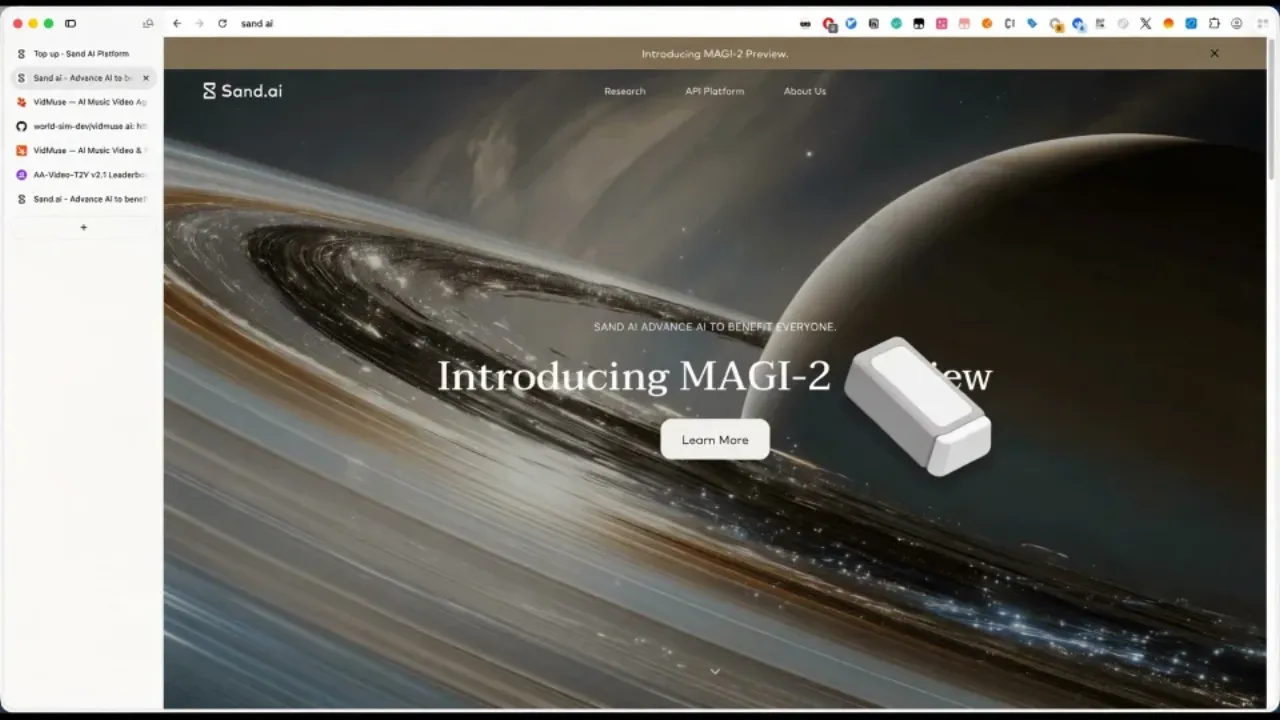
MAGI-2 is an AI video model developed by Sand.ai, with about 480 billion parameters, released on November 24, 2026. It makes up to 30 seconds of 1080p, 25 fps video with native sound in one generation and accepts up to 20 reference files.
Where can I use MAGI-2 online?
Right here. Open the video studio and choose MAGI-2 in the model menu — nothing to download and no GPU needed. It works in text to video, image to video and media to video: 1080p, 4–30 seconds, native sound and up to 20 references. MAGI-2 is available to members.
How does MAGI-2 compare with Seedance 2.5?
Both make up to 30 seconds of video with sound in one generation. Seedance 2.5 offers more resolutions (up to 4K) and more references; MAGI-2 is 1080p only but costs far less. Both are in the same studio, so you can try one prompt on each.
How do I make a video with MAGI-2?
Three steps: 1) sign in and open the studio — text to video, image to video or media to video; 2) choose MAGI-2 in the model menu and set the length (4–30 seconds) and aspect ratio; 3) write a prompt or upload references, check the credit cost and generate. Prompts split into beats with marked time ranges work best.
How long are MAGI-2 videos, and at what resolution?
A single MAGI-2 generation can run up to 30 seconds at 1080p and 25 fps, in six aspect ratios. Write longer scenes as beats with time ranges.
Does MAGI-2 generate audio?
Yes. MAGI-2 generates picture and sound in the same pass, including dialogue with lip-sync, foley, ambient sound and music. Public tests describe the audio as usable but less refined than the picture.
How many references can MAGI-2 use?
Up to 20 per request: as many as 10 images, 5 video clips and 5 audio clips, each with its own role, such as a character, a location, a camera move or a voice.
What can I make with MAGI-2?
Short films, ads, dialogue scenes, music-video style clips and stylized animation — anything that gains from one long take, steady characters and sound that matches the picture. Public tests suggest detailed, beat-by-beat prompts give the best results.
What is the difference between MAGI-2 and MAGI-2 Preview?
MAGI-2 Preview was an August 2026 research release with about 114B parameters (about 6B active). The full MAGI-2 scales to about 480B (about 28B active), trains on about 4T tokens and raises its Video Arena Elo from 998.5 to 1150.3.
What is MAGI-1, and how is MAGI-2 different?
MAGI-1 was the earlier model in the family. It built video chunk by chunk, which suited streaming and continuation. MAGI-2 moves to a single-stream Transformer with Multi-Head Latent MoE, generates sound with the picture and scales to about 480B parameters.
Is MAGI-2 open source?
Not yet. Open weights and a technical report have been announced, but as of November 26, 2026 the weights have not been published. We will update this page when they are.
Is MAGI-2 free, and what does it cost?
MAGI-2 is a members-only model. Its price depends only on the video length, whatever the mode, aspect ratio or number of references. The studio shows the exact cost before you generate; see the pricing page for plans.
Are MAGI 2, MAGI2 and MAGI-2 the same model?
Yes. MAGI-2 is the usual spelling; MAGI 2 and MAGI2 are just other ways people type the same model name. MAGI-1 is the earlier model in the same family.
Can I use my generated videos in commercial projects?
That depends on your plan, the model you used and that model’s terms. Review our Terms of Service, and make sure you have the rights to every image, likeness, voice, music or brand asset you upload.
MAGI-2 is live
Turn one prompt into a 30-second film with sound
MAGI-2 is open to members in our studio: 30-second, 1080p videos with native sound. Write a scene, add an image or bring up to 20 references, and start creating.